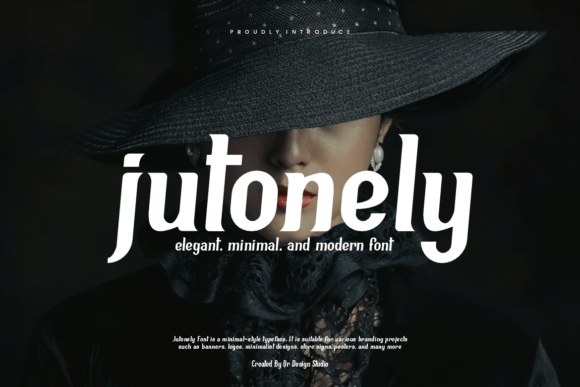
Jutonely: A Cool Display Font for Creative Branding
Jutonely in a Café Logo Concept
It was one of those quiet afternoons when I opened a blank brand board and started sketching out ideas for a local café’s visual identity. The client wanted something modern but approachable, with a touch of personality. That’s when I first tested Jutonely — a cool display font that immediately caught my eye. Its clean lines and slightly stylized curves gave the logo a friendly yet professional vibe, making it feel perfect for a space where people come to relax and enjoy good coffee.
Jutonely as a display font is versatile enough to work across different scales, from a small café sign to a large banner at the entrance. It doesn’t scream for attention but still holds its own, which is exactly what you want for a brand that wants to be remembered without being overwhelming.
Jutonely on Packaging Mockups
Next up, I moved to packaging mockups. The client had a line of specialty teas and needed labels that would stand out on store shelves. I tried several fonts before settling on Jutonely. Its unique character made the product names pop while keeping the overall design elegant. It wasn’t too bold or too subtle — just right for catching the eye of a busy shopper.
What stood out most was how well Jutonely paired with other fonts. When used alongside a sans serif font for supporting text, it created a nice contrast without clashing. This makes it a great option for anyone looking to create a balanced typography system for packaging, product labels, or promotional materials.
Jutonely in Social Media Graphics
When it came time to design social media graphics for the café, I found that Jutonely worked incredibly well for headlines and callouts. Whether it was a post about their new latte flavors or a weekend event announcement, the font added a sense of energy and creativity to the content. It felt like the perfect match for a brand that wanted to be seen as fun and forward-thinking.
One thing I noticed was how Jutonely performed on digital screens. It remained legible even at smaller sizes, which is crucial for mobile users. As a display font, it’s not meant for long paragraphs, but for short phrases and headlines, it shines. This makes it ideal for Instagram posts, Facebook banners, or any platform where visual impact matters more than readability in lengthy text.
Jutonely for Business Cards and Brand Boards
I also tested Jutonely on business cards and brand boards. On cards, it added a touch of sophistication without feeling too formal. The font’s slight flair gave the cards a memorable look, which is essential when someone is handing out physical contact information. On brand boards, it helped unify the visual language across different elements — from logos to color palettes — by serving as a consistent typographic anchor.
However, I did notice that Jutonely might not be the best fit for projects requiring high readability at small sizes, such as body text in reports or long-form web content. It’s best used sparingly and strategically, especially in branding where it can act as an accent or headline font rather than a primary typeface.
Jutonely and Commercial Typography
If you're considering using Jutonely in commercial projects, it's important to check the licensing terms. For brand identity work, packaging, or print-on-demand products, ensuring that you have the right permissions is crucial. Jutonely seems to support a range of file formats, including webfonts, which is a big plus for designers working on both digital and print-based assets.
As a display font, Jutonely brings a fresh perspective to your creative ideas. Whether you’re designing a logo, creating a brand board, or crafting a social media layout, this font has the potential to elevate your work. Just remember to use it wisely — let it shine in the right places, and your designs will speak volumes.