Dreamy Lanie: A Vibrant Display Font for Bold Branding
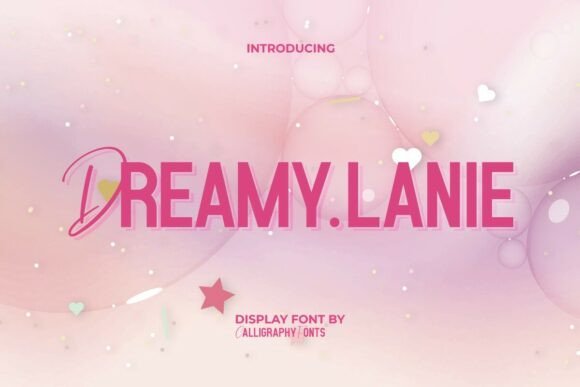
There’s something about a fresh design project that feels like opening a blank canvas. Recently, I found myself working on a branding project for a small artisanal coffee shop nestled in a quiet neighborhood. The client wanted a visual identity that felt both inviting and memorable. That’s when I first tested Dreamy Lanie, a display font that immediately stood out with its ultra-bold, slightly condensed capital letters. It wasn’t just a font—it was a statement.
Dreamy Lanie in Logo Design for a Cozy Café
I began by sketching a few logo drafts, and the moment I applied Dreamy Lanie to the name of the café, something clicked. The font’s boldness gave the brand an air of confidence without feeling overpowering. Its slightly condensed form allowed it to sit comfortably on a circular logo, making it feel modern yet approachable. I quickly realized that Dreamy Lanie was perfect as a logo font, especially for businesses aiming to convey a sense of vibrancy and femininity in their brand messaging.
The next step was testing how the font would look across different platforms. On a business card, it had a clean, elegant presence. On a shop sign, it commanded attention from passersby. Even in digital formats, such as social media posts, Dreamy Lanie maintained its readability and visual impact. It became clear that this display font was more than just a stylistic choice—it was a strategic one.
Dreamy Lanie for Packaging and Product Labels
As the project progressed, I moved on to packaging design. The coffee shop sold custom blends, and each label needed to reflect the brand’s personality. Dreamy Lanie worked exceptionally well on product labels. Its condensed structure made it ideal for limited space, while the boldness of the typeface ensured that the brand name remained prominent even at smaller sizes.
I paired Dreamy Lanie with a clean sans serif font for supporting text, which created a balanced contrast. This combination helped maintain a professional look while still allowing the brand to stand out. The result was a cohesive set of packaging materials that felt both unique and consistent with the café’s overall identity.
Dreamy Lanie on Social Media Graphics and Website Headers
When designing social media graphics for the café, I experimented with Dreamy Lanie in various layouts. Whether it was used in a hero section or as a headline for a promotional post, the font always brought energy to the visuals. Its slightly condensed form made it adaptable to different screen sizes and resolutions, ensuring that it looked great on both desktop and mobile devices.
On the website header, I placed Dreamy Lanie in a large, eye-catching format. It helped create a strong visual hierarchy, drawing the user’s attention directly to the brand name. The font’s boldness also contributed to a sense of professionalism, which was crucial for a new business trying to establish itself in the market.
Dreamy Lanie as a Display Font for Print and Digital Materials
One of the key considerations when using Dreamy Lanie is its role as a display font. It works best in short-form text, such as headlines, logos, and taglines, rather than long paragraphs. In print materials like flyers and posters, the font added a touch of elegance and sophistication. The slight condensation of the letters allowed for tighter spacing, which was essential for creating visually appealing layouts.
For digital use, I made sure to check the file formats available—such as OTF and TTF—which made it easy to integrate into web design projects. The font’s compatibility with various platforms meant that it could be used consistently across all brand assets, from printed menus to online advertisements.
Dreamy Lanie and Font Pairing for a Balanced Visual Identity
Font pairing is always an important part of any design project, and Dreamy Lanie offered some interesting options. When paired with a complementary serif font, it created a classic yet modern aesthetic. For a more contemporary look, a sleek sans serif font worked well alongside Dreamy Lanie, providing a nice contrast in weight and style.
I also considered using a script font for accents or signature elements, which added a personal touch to the brand identity. However, I made sure not to overuse these pairings, as Dreamy Lanie already had enough character on its own.
Testing Dreamy Lanie Before Finalizing a Brand System
Before committing to Dreamy Lanie as the primary font for the café’s brand system, I ran several tests. I printed mockups of logos, packaging, and marketing materials to see how the font performed in real-world conditions. I also checked its legibility at different sizes and distances, ensuring that it would remain effective both up close and from afar.
Another consideration was the font’s multilingual support. While the project didn’t require it, knowing that Dreamy Lanie can handle multiple languages makes it a versatile option for designers working with international clients or expanding brands.
In the end, Dreamy Lanie proved to be a valuable asset to the project. Its bold, slightly condensed form brought energy and clarity to every design element, from the logo to the packaging and beyond. It wasn’t just a font—it was a design tool that helped shape the brand’s voice and visual identity in a meaningful way.